
Finding Marion County Resident Records
No official roster lists every person at a Marion County address. So the first record you reach for should match what you already know. Have a situs address? The assessor opens a current tax account. Have a name? A court index, a historical archive, or a voter route may test it. But each carries different coverage and access limits. A recorded instrument links a party to a property transaction at a fixed date. Historic sources place someone in Marion County only at that time. They never prove where a person lives now.
Use every hit for its narrow purpose. The assessor application names a tax account and its listed owner. The voter route shields protected data. Court and archive searches each reach different eras and counties. A record can be restricted. It can be misspelled in the index, fall outside Marion County, or exist only on paper. One empty search result does not mean the person was never there.
- Start with the most specific known fact, such as a full name, a street address, an account number, or a dated event.
- For a property lead, use the assessor and parcel map to keep the situs, tax lot, and owner mailing fields separate.
- Take an instrument number or party name to the Clerk's recorded-document channel that matches the transaction date.
- Use the court, elections, OHA, or Archives channel only for the particular question that office is allowed to answer.
- When a defined county record is not online, send a narrow request for the existing record rather than asking for a new compiled list.
Note: A dated record carries the most weight when a second independent source confirms the same identity, place, and time.
Marion County Offices Behind Resident Records
Several offices split the resident-records work in Marion County. The Marion County Clerk, Licensing and Recording keeps title-affecting records, issues marriage licenses, and maintains the recording archives. The Assessor holds the parcel and current tax-account side. Elections run through the Clerk locally, while Oregon's My Vote service offers a state self-service route for voters. The roles overlap in any person search. Just remember that the similar-looking fields across these offices do not carry the same meaning.
Clerk, Licensing and Recording
555 Court St. NE, Suite 2130
Salem, OR 97301
503-588-5225
Marion County Assessor
County property and tax records
Current parcel and tax-account access
Online record system
Marion County Property Search Fields
For a Marion County address, the Marion County Assessor Property Search is the practical entry point. It costs nothing and refreshes every 24 hours. The form stays deliberately narrow. Pick one criterion: Account Number, Map Tax Lot, Situs Address, or Subdivision, then enter up to 50 characters. A partial situs address works fine. Owner-name searching is not offered, even though each result row shows an owner name.
| Assessor control | Use | What a result displays |
|---|---|---|
| Account Number | Known tax account | Account number, owner name, map tax lot, situs address |
| Map Tax Lot | Parcel reference from a map or deed | Current property-account match |
| Situs Address | Physical location, including a partial street entry | Address-linked tax account result |
| Subdivision | Known subdivision name | Property results within that recorded context |
Read an assessor result as evidence about the property account, nothing more. The tax mailing address can differ from the situs, which happens often with an entity, an estate, or an owner who gets mail elsewhere. To walk a full street's property sequence, use the Marion County street directory workflow rather than stretching an assessor result into a household list.
Marion County Parcel Facts in Context
The county's Property Records Viewer supplies the map half of a property search. Its published parcel field list runs long. It covers tax lot, account number, site address, owner mailing fields, plat, block, lot, zoning, values, districts, instrument number, instrument date, and sale price. Geometry is parcel-based. That keeps a location tied to the correct polygon instead of a loose street label.
- Parcel
- A mapped tract tied to an assessor account. It is not a list of the people inside a building.
- Situs address
- The physical property location recorded for the account, distinct from an owner's mail delivery address.
- Index
- A finding tool that points to a record. An index result is not automatically a certified document.
- Criss-cross directory
- An address-oriented historical directory, if a verified volume is available, used to compare dated household entries.
Treat the viewer as a research aid, not a legally recorded survey. Carry a property question from the map to the Clerk with the tax lot, legal description, and instrument details in hand. A parcel edge or matching city label is context. It is never proof of occupancy.
Marion County Deed Records by Era
Marion County maintains two overlapping recorded-document paths. The Digital Research Room serves as the county route for modern documents from 1974 forward. It offers a public index and image service, but the images are not certified copies. The county historical deed search carries an 1855 through 1976 label on the records page. The live form says 1850 through 1976. Keep a note of which label you used. The modern research-room entry screen displays the county's public-service notice before any document search begins.
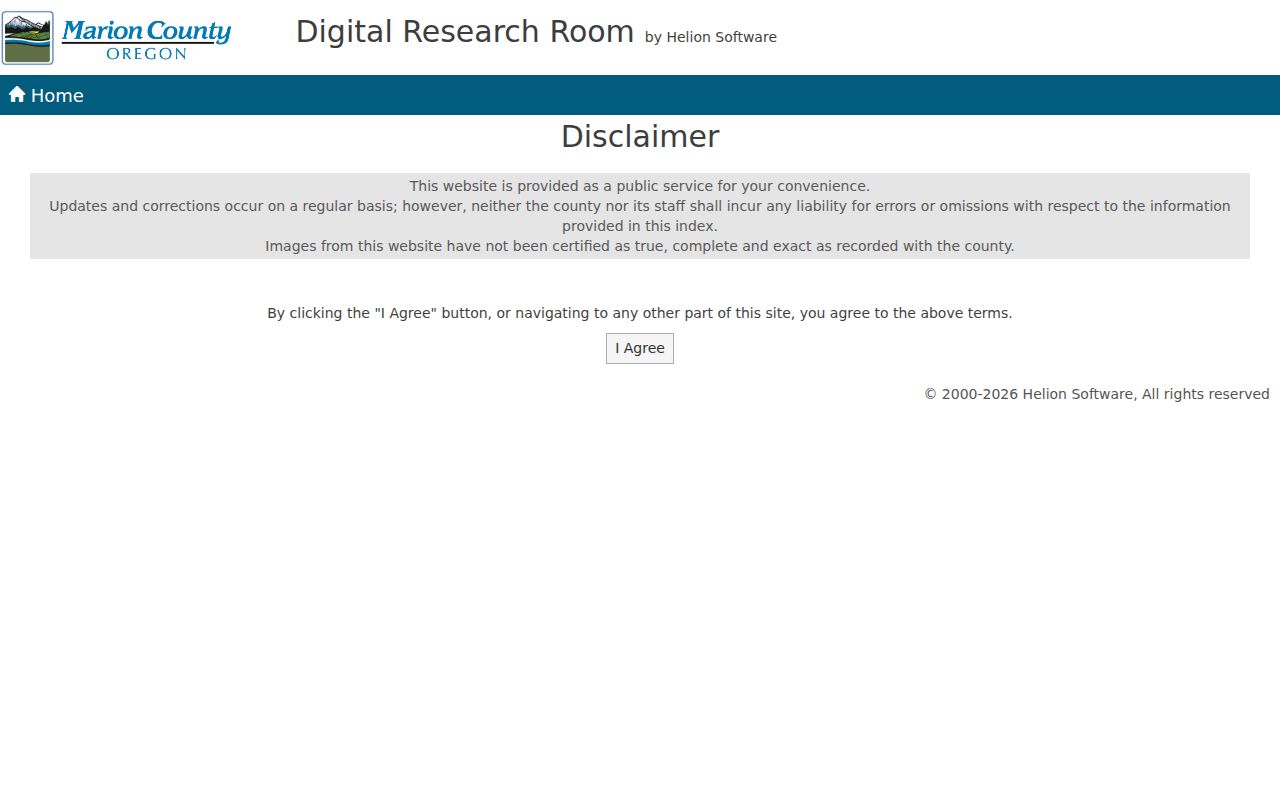
Older transactions work through the Historical Deeds Search. It is built on direct party, meaning grantor, and indirect party, meaning grantee, plus dates and instrument type. There is no address search here. Let an owner name, tax lot, legal description, or recording chronology guide the party search. When a certified or full image matters, request the record from the Clerk. The county historical deed index presents its party and date controls for the earlier-record path.
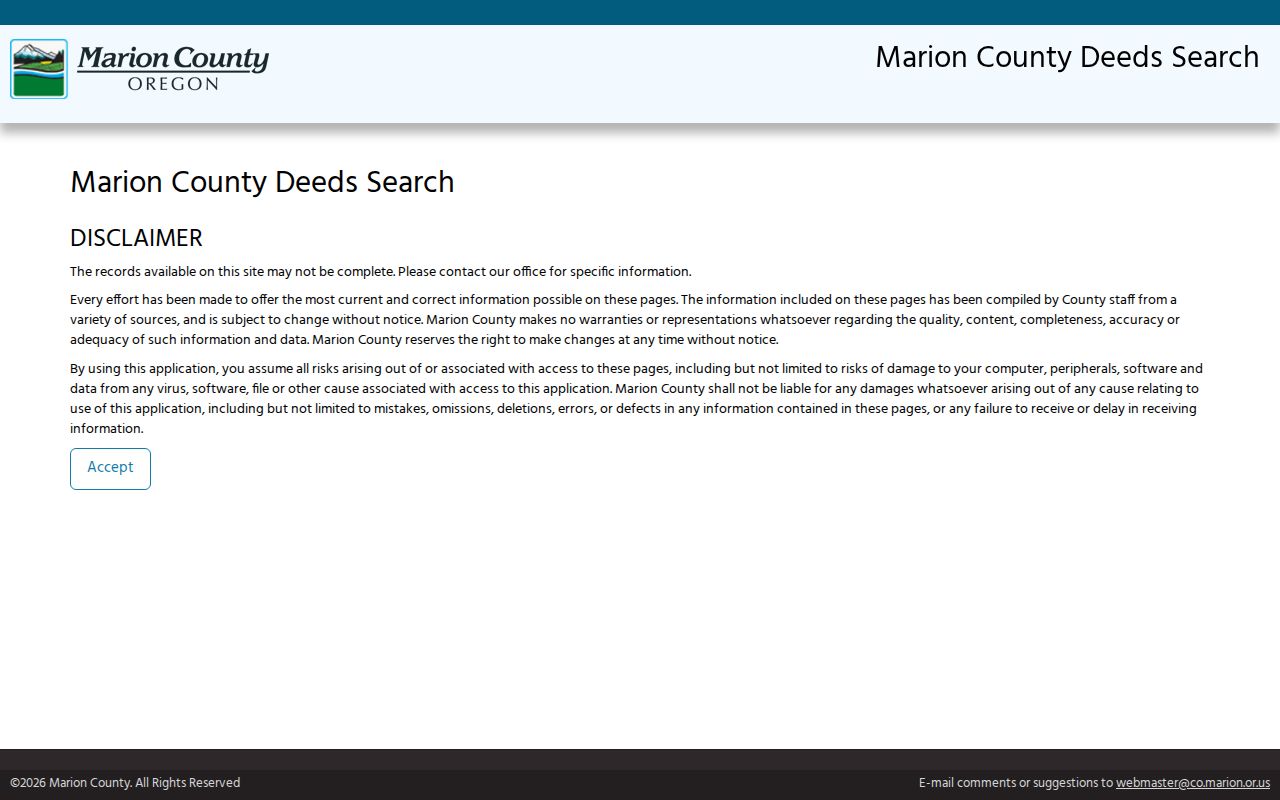
The index earns the most trust when a legal description and party role travel with the result. The overlapping years make a 1974 to 1976 transaction a cross-checking opportunity. They are not two separate deals.
Current Marion County Resident Sources
Current resident evidence in Marion County splits by custodian and record purpose. Each source answers a different question. The property roll carries an owner tax-account name and a situs. A recorded-document index names parties to a transaction. Court data identifies a party to a public case. Oregon voter records follow a defined statutory release process with exclusions. No single row should be read as a claim about everyone at an address.
| Record source | What it can establish | Custodian | Access route |
|---|---|---|---|
| Property tax account | Situs, tax lot, owner-name result, mailing-field context | Marion County Assessor | Free Property Search and parcel viewer |
| Recorded documents | Named parties and dated property instruments | Marion County Clerk | Modern research room or historical deed index |
| Public court record | Party, case, events, and disposition where public | Oregon Judicial Department | Free basic search, subscription, terminal, or request |
| Voter registration record | Permitted elector fields and civic status | County Elections and Oregon Secretary of State | Self-service or statutory list request |
| Historical archive material | Dated census, probate, assessment, tax, and related evidence | Oregon State Archives | Database, appointment, microfilm, or reference inquiry |
For one named individual, test distinct sources one at a time rather than building a profile from a single partial hit. Track the source date, the jurisdiction, and the party role on every result. Watch the difference between a physical address and a mailing field too.
Marion County Voter Records and Protection
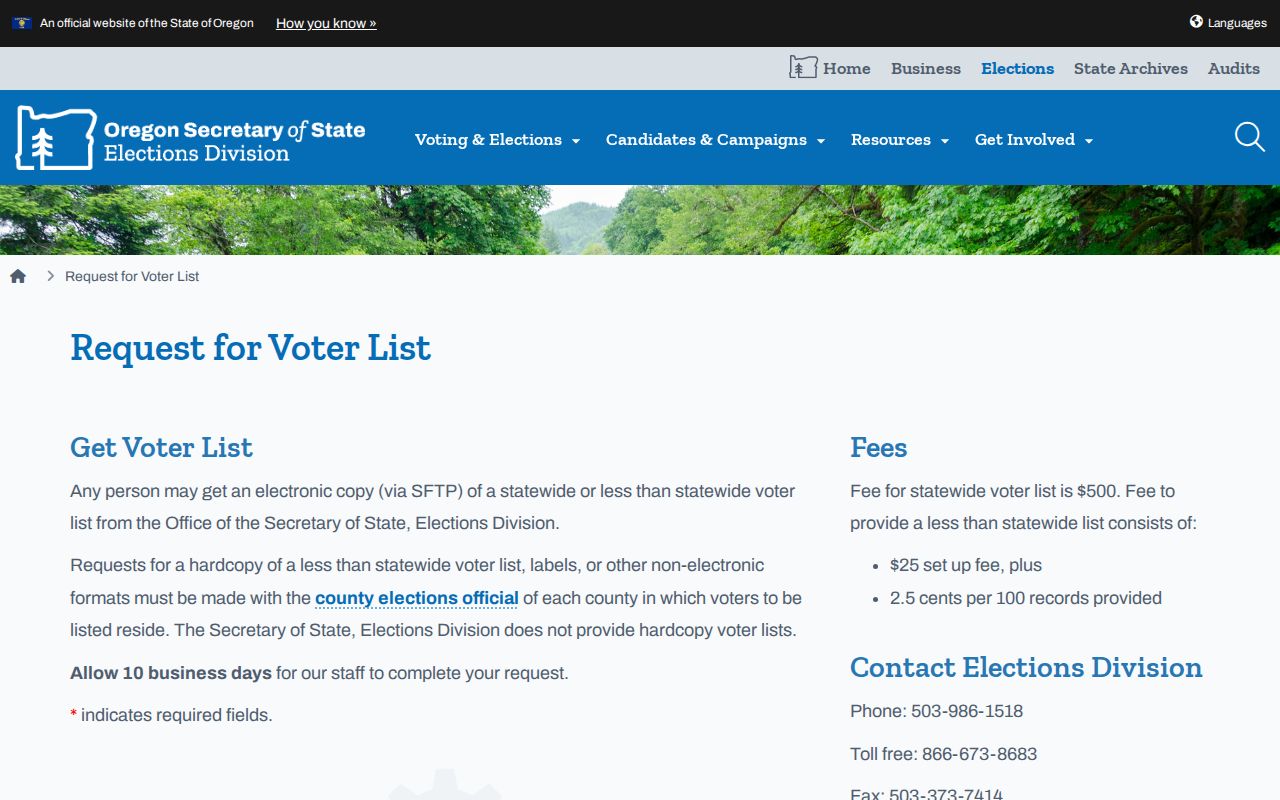
Voters in Marion County can manage their own registration through Oregon My Vote. That tool is self-service, not a browse-by-address lookup. Anyone wanting bulk data takes a different path. The Secretary of State supplies an electronic voter list through SFTP. The list can cover the whole state or a smaller area. A statewide list costs $500. A smaller one runs $25 for setup plus 2.5 cents per 100 records, with a stated 10-business-day estimate. Hardcopy and label requests route to the county elections official instead.
Oregon's voter-list request page spells out the difference between the statewide and smaller-area electronic options. Reading it before a request goes in saves confusion.
Two statutes draw the line. ORS 247.945 and ORS 247.948 govern what a voter list may contain. Defined registration information can appear, including year of birth and precinct data unless protection applies. Ballot choices stay private. So do full birth dates, signatures, Social Security numbers, and driver license numbers. Safe at Home participants and other protected entries remain outside every release.
Respect protected records. Do not use a voter, property, court, or archive result to pursue a protected location or to harass anyone. Oregon's Safe at Home program exists to protect eligible survivors through a substitute address.
Marion County Court and Vital Checks
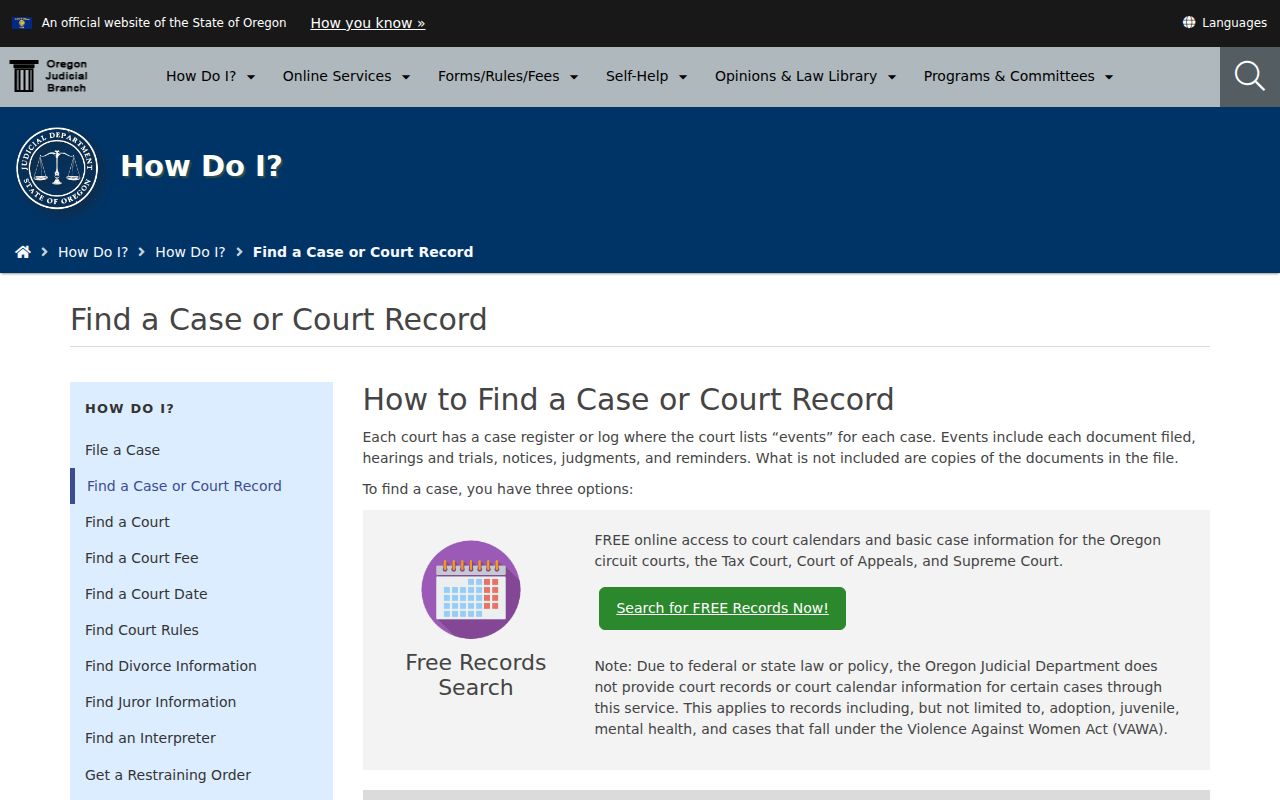
Court research in Marion County has a natural starting point. That is the Oregon Judicial Department Records and Calendar Search. It returns basic public case and party information, events, and dispositions. It is not the official register. Confidential categories never appear there. Fuller OJCIN access requires a registered, low-cost subscription. Marion Circuit Court also keeps six free public terminals. They are staffed on weekdays from 8 a.m. to noon and 1 to 5 p.m. Bring a case number and the exact document or hearing date to request known items. The state court search information page lays out the basic route and its access tiers.
Vital records run on their own state clock. Oregon seals birth records for 100 years. Death, marriage, divorce, domestic-partnership, dissolution, and fetal-death records stay closed for 50. Oregon Health Authority ordering guidance spells out eligibility and ordering for current certificates. The State Archives handles qualifying historic ones.
Marion County Requests for Existing Records
When no portal holds the record, the Marion County public-records request procedure is the route. Identify the department, the record type, and the date range. Add any address, parcel, account, instrument, or case detail. These narrow the search for staff. Say whether you want inspection or copies. One limit matters. The Oregon Public Records Law covers records that already exist. It never forces a department to build a custom chronological resident list. The county request page posts the written process, its calendar, and fee details.
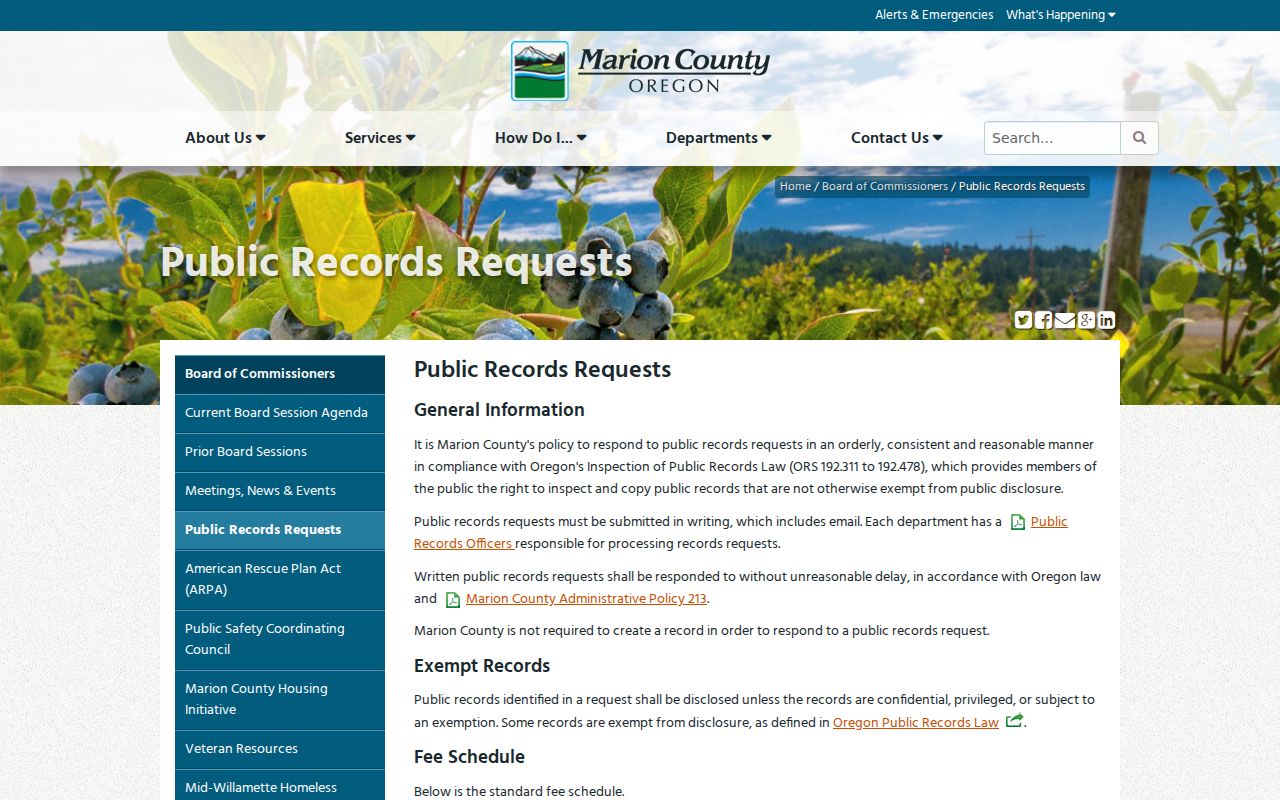
Timing and costs are published. Marion County normally acknowledges a request within five business days. Completion or a written processing response follows within 15. Standard fees include 25 cents per photocopy, $10 for a flash drive, and $1 for a CD or DVD. Postage bills at actual cost. Staff time bills at a burdened rate, and an estimate or deposit may apply.
Marion County Historical Directory Trails
Historic digging rarely works like a tidy online shelf. The City of Salem's historic-property research guidance notes one practical snag. Before 1932, a city directory is only useful once you already have a person's name. A deed, tax roll, or probate file can supply that first name. So can a census line, newspaper notice, or map. Match a directory year against an address. Keep the source date in view while you work.
For locating volumes, the honest routes are three. They run through the Salem Public Library online-resources page, Oregon State Library reference staff, and the State Archives. They can confirm which volume or microfilm run exists. A criss-cross directory helps once a verified volume is in hand. Marion County publishes no complete publisher-by-publisher shelf list. Collection questions belong with the Marion County city directory material.
Marion County Before Its Current Name
Marion County began in 1843 under the name Champooick, also spelled Champoeg. It took its present name in 1849. Salem became the county seat that same year. The State Archives records later boundary shifts too, including the 1847 split that created Linn County and the current line drawn in 1854. Those dates matter for a records search. An early family may sit under a different county term than expected.
The Early Oregonians database handles that problem well. It covers people tied to Oregon from 1800 to 1860. It accepts a Marion or historic Champoeg county selection, a date range, and a first or last name. A wildcard works when paired with at least two other characters. Results open to Person Profiles with associated-record and federal-census tabs, though a blank field is never proof a person was absent.
The State Archives Marion County guide traces the local early-record trail behind those entries.
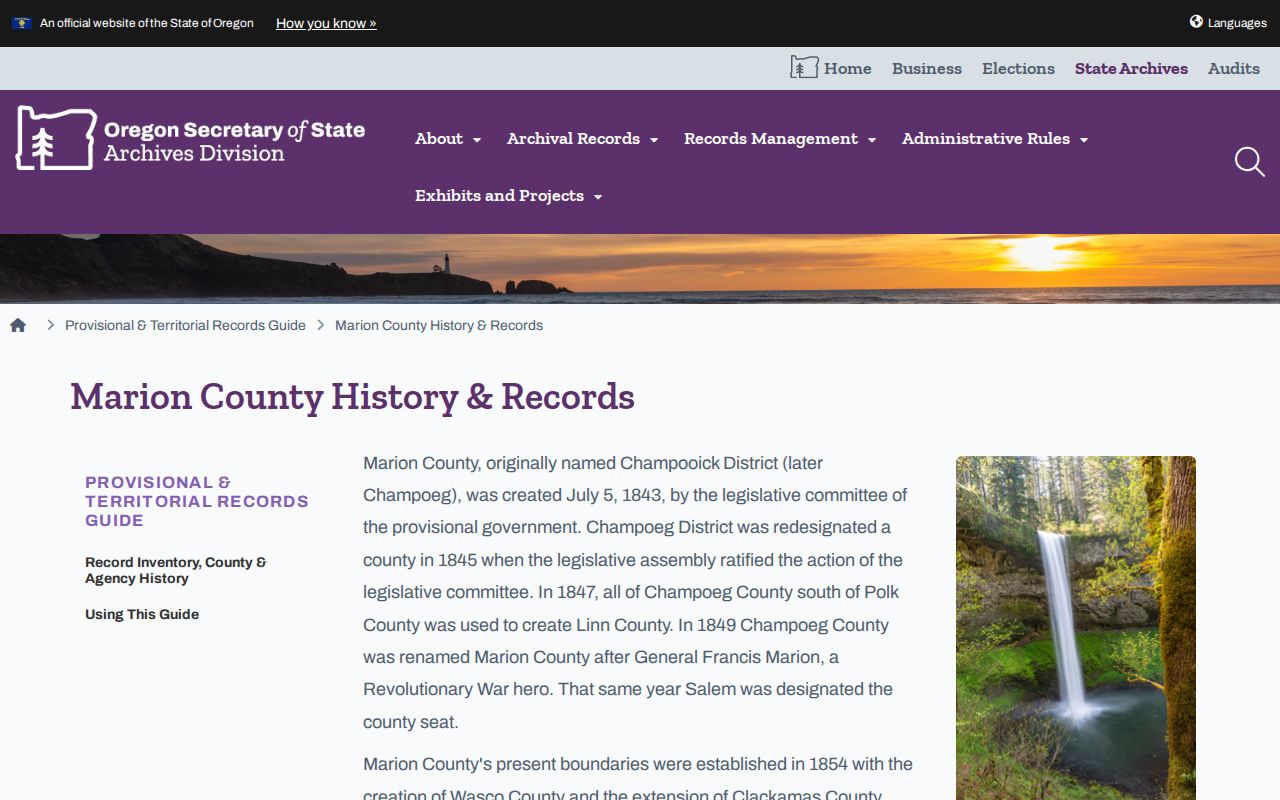
Period evidence comes in many forms here. Assessment rolls run 1854 to 1859. County census rolls cover 1849 to 1857. Clerk registers span 1850 to 1859. Probate, tax, naturalization, and will materials fill out the shelf. Each one documents a past record event, never a current location.
Marion County Results Need Boundaries
Commercial people-finder products blend public and other data. Their matches can be stale or misattributed. An official roll works differently. It has a known custodian, a date, and stated limits. Slower to use, yes. Yet it is the right place to test a real question. Remember the shapes of these sources: a court docket is a chronology, not a biography; a property owner field is not an occupant roster; a voter record never reveals ballot choices.
| Research route | Strength | Limit to retain |
|---|---|---|
| Official county or state record | Named custodian and defined record purpose | Coverage, access, and confidential-data rules still apply |
| Historic archive source | Dated primary or indexed evidence | Shows a past source event, not a present identity |
| Private compiled directory category | May suggest a lead to verify | May combine stale or mismatched data and is not a custodian record |
Begin at the official source, hold on only to the details that separate a same-name record, and ask the custodian for a certified copy or a correction route when the fact truly matters.
Marion County Registration Is Self-Service
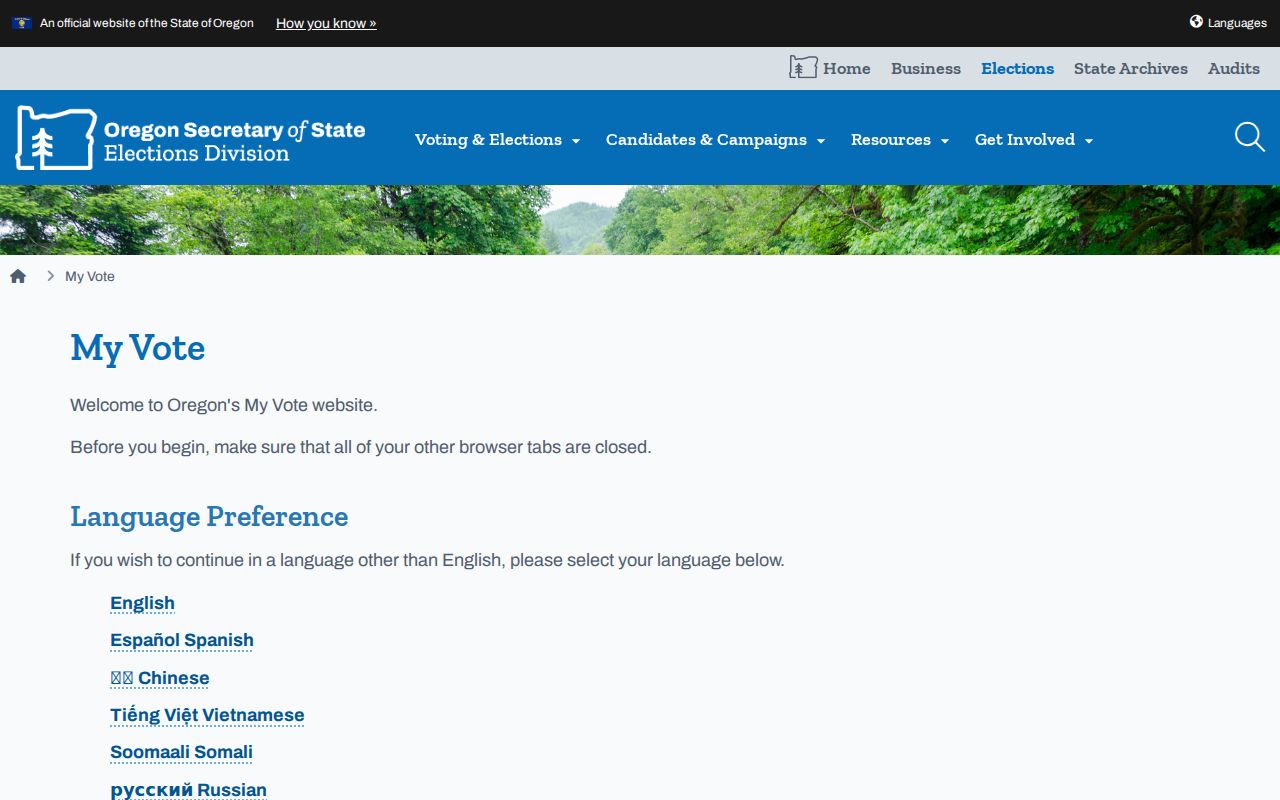
Oregon My Vote gives each voter a secure, self-service way to manage registration. A Marion County voter can update an address there. The voter can also check registration status and find ballot drop sites. The same service points to the county elections office for anything that needs a person. Self-service registration is the norm across Oregon. No office visit is required for routine updates. A Marion County residents directory can point to the doorway. But the voter completes each step personally.
The Oregon My Vote entry page is the official starting point. It covers that personal registration service.
Security here is a feature, not an obstacle. Use a county or state list request only when the statutory route fits the question and the protected-data limits can be respected.