
What a Marion County Resident Lookup Can Confirm
Official records in Marion County do not form a public list of everyone who lives here. They document separate events, parcels, cases, registrations, and filings. Start with the question behind the name. The Marion County Assessor’s Property Records can return a current property account, tax lot, situs address, and owner name in its results when a known account, tax lot, situs address, or subdivision is searched. The county parcel layer adds an owner mailing field and instrument clues, but neither source identifies every occupant. A resident lookup should state the record level clearly: owner, party, elector, or event subject.
| Record | What It Confirms | Where | Access |
|---|---|---|---|
| Property account and parcel | Tax lot, situs, owner name in results, and owner mailing field | Marion County Assessor and Property Records Viewer | Free public tools; owner data are not an occupancy roster. |
| Recorded instrument | Named parties and a property-related document trail | Marion County Records and Archives | Modern index is 1974 to present; historic deeds cover the stated 1850 to 1976 period. Online images are not certified. |
| Public court record | Named party, public case, events, and disposition | OJD Records and Calendar Search | Free basic search; deeper Register of Actions and judgment-docket research uses subscriber or counter channels. |
| Voter registration or list | Authorized elector fields, precinct, and registration context | Oregon My Vote, county Elections, or the state list route | My Vote is self-service, not browse. Lists have statutory fields and protected-voter exclusions. |
| Vital or historic event | Birth, death, marriage, divorce, or related historical evidence | OHA Center for Health Statistics and Oregon State Archives | Restriction periods, eligibility, identification, and fees apply to certificates. |
When an address is known, begin with the parcel system and retain the tax lot as the stable key. When a case number or court date is known, begin with the court. A family-history question may belong at the Archives or with the record custodian. These channels can support a Marion County resident lookup, but a source that is silent may be restricted, undigitized, indexed under another spelling, held elsewhere, sealed, or never created.
Match a Name Across Marion County Records
A careful resident lookup separates people who share a name. Search a full name, then compare a middle initial or lack of one, former or maiden names only where a lawful record supplies them, and punctuation or spelling variants. For property material, compare the tax lot and situs against the owner mailing address instead of treating them as the same fact. For court material, compare court or county, filing dates, party role, related parties, and case type. A common surname without those anchors is an unresolved same-name collision.
Dates and record roles do much of the work. A recorded document can identify a grantor, grantee, trustee, estate representative, or entity, while a court return identifies a party to a case. Neither label means the person currently lives at an address. For an older lead, use historical county or archival material only with its source dates. Keep the spelling, date, jurisdiction, record level, and source reference with each note.
Note: Two independent records that agree on a date, place, and role are stronger than repeated results copied from one index.
Verify a Marion County Resident Across Records
Use a narrow sequence when the goal is to decide whether two public records likely concern the same individual. The order below avoids turning an address, a court hit, or a dated event into more than it can prove. A property result establishes a parcel connection, not a household list. A court result establishes public case information, not current location. Vital records require their own access rules.
- Write down the exact name, date range, and the known address or tax lot. In the parcel tools, keep the situs and owner mailing values in separate columns.
- Search the name and supported variants through the free court service. Compare court, case number, filing or event dates, party role, and any related parties before treating it as the same person.
- Use a dated property instrument or an authorized voter or vital-record channel only for the fact it actually documents. Cross-check the tax lot, legal description, address, event date, or court role.
- When a primary document is needed, request the known document from its custodian. Do not rely on an uncertified image or a missing result as a final answer.
A probate file can be useful for an heir question because public petitions, inventories, notices, and orders may identify a personal representative or interested person. Begin with the known decedent and public case file, then read dates and roles carefully. For an adoption or birth-parent question, use OHA’s official access paths rather than attempting to work around sealed records.
- Docket
- A docket is the court’s dated case timeline. It can list filings, hearings, notices, judgments, and other events, but it is not a biography or address record.
- Index and image
- An index helps locate a record by names, dates, or identifiers. An image is a view of the document or record page and may still be incomplete, restricted, or uncertified.
- Certified copy
- A certified copy is issued by the custodian with its certification. It is different from a screen view or ordinary online image.
Read Marion County Court Returns Carefully
Oregon Judicial Department Records and Calendar Search provides basic public case and calendar information. It can show basic case information, party information, event entries, and a disposition. The free display limits party information to first and last name, and it is not the official register under ORS 7.020. A Marion County resident lookup can use that result to find a case number or name variant. It cannot convert a docket hit into proof of current residence, identity, or a complete history.
| Return field | What it can show |
|---|---|
| Party name | First and last name in the free public display, which still needs identity checks. |
| Case number and court | The case identifier and its Marion or other court placement. |
| Events and dates | Filing, event, hearing, or disposition dates as applicable. |
| Case information and disposition | Basic public case details, parties, event entries, and disposition. |
| Documents | The free service is basic information. Deeper material follows OJCIN, a counter request, or a copy route when public. |
Confidential and controlled categories matter. OJD identifies adoption, juvenile, mental-health, and VAWA cases among the kinds of information not provided through the online service. A missing return does not prove a person has no court history, and an online return may not survive sealing or a setting-aside process.
Use Marion County Court Access Channels
Oregon offers three distinct court channels. The free search is useful for basic public information. OJCIN Online is the paid subscriber service for official Register of Actions and judgment-docket research across Oregon courts. In Marion County, the Circuit Court records page provides the in-person and request fallback: the records lobby has six free public terminals, available weekdays from 8 a.m. to noon and 1 to 5 p.m.
For copies, first identify the case number and the exact document or hearing date. The court posts statewide English and Spanish record-request forms and audio-recording request forms. Its listed standard-copy charge is $3.00 plus $0.25 per page, certified copies are $5.00 plus $0.25 per page, and exemplified copies are $10.00 plus $0.25 per page. Mail a known-record request to Marion County Circuit Court, Attn: Court Records, P.O. Box 12869, Salem, OR 97309. Court Records can explain access procedures at 503-588-5101.
The OJD court-records explanation distinguishes the free basic service, paid OJCIN, and local terminal access.
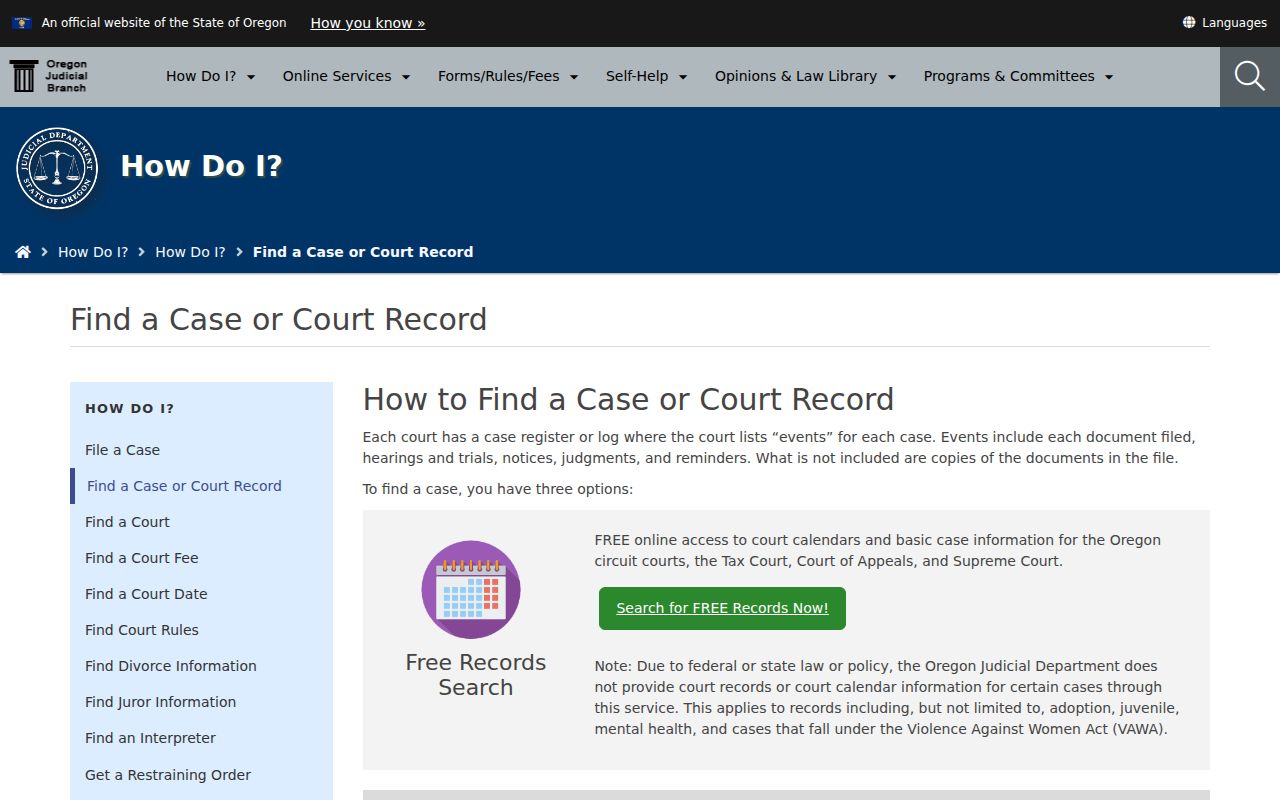
That distinction keeps a Marion County court search tied to the access channel that can actually supply the needed public record.
Time Limits for Marion County Vital Records
Vital evidence has a date-based route. Oregon restricts birth records for 100 years and restricts death, marriage, divorce, domestic-partnership, dissolution, and fetal-death records for 50 years. OHA eligibility rules require an eligible relationship or legal authority and identification during the restricted period. After the historic period, the State Archives vital-record route is the research path. In 2026, the Archives lists births through 1925 and death, marriage, and divorce records through 1975 as newly open under those rolling windows.
OHA’s initial record search and first certificate cost $25 by mail or drop box. Online ordering adds the listed $7 expedite fee and $15.50 vendor identity-review fee, phone ordering adds the listed $17.20 vendor and security fee, and an in-person appointment is listed as $25 plus a $3 identity-authentication charge. The event-specific order form controls the channel and required material. For a historic county marriage lead, use the county index as an index, not as a certified state record.
The Oregon birth certificate order guidance shows the official ordering route, identity requirements, fees, and delivery details.
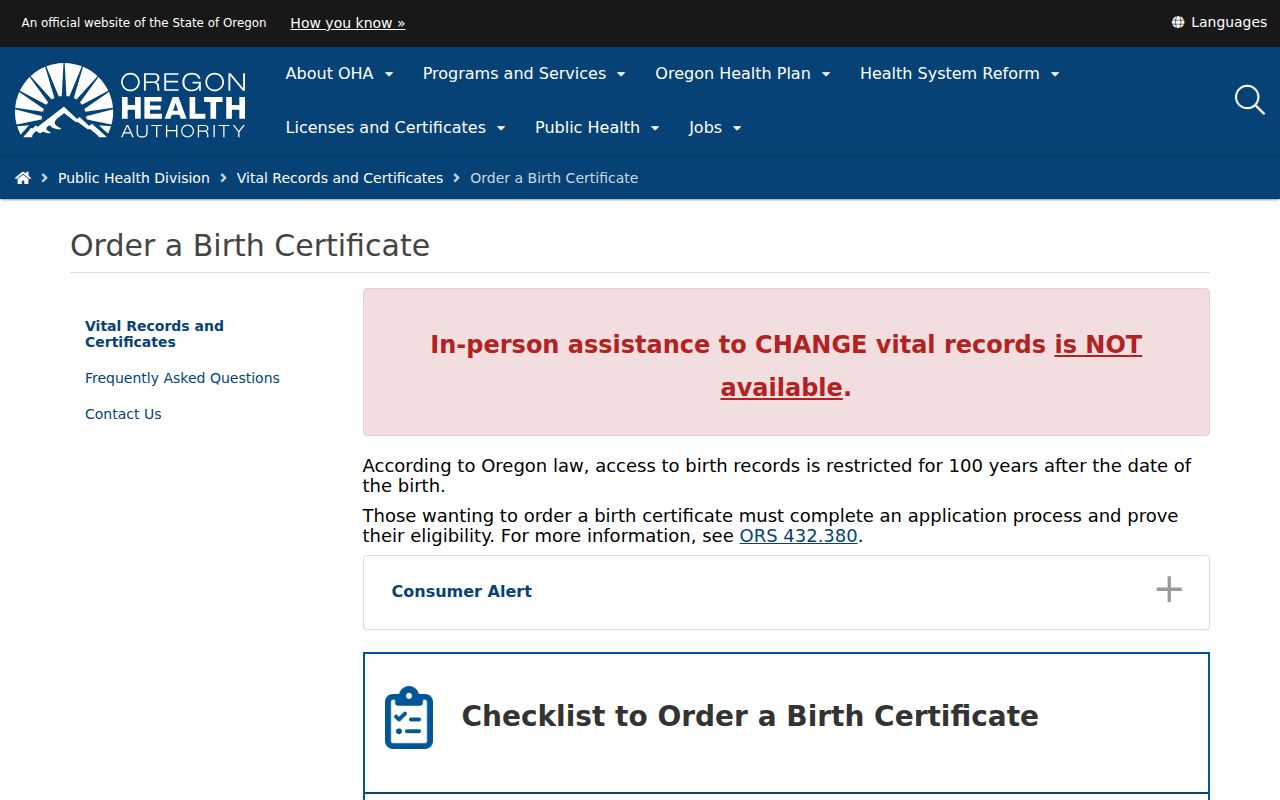
Use the age of the event and the applicant’s eligibility to choose between an Archives search and an OHA certificate request.
Marion County Voter Record Boundaries
Oregon My Vote is a secure self-service route for a voter to check, view, or update that voter’s own registration, find ballot or drop-site information, and locate an elections office. It is not a public name-browse tool. Marion County Elections can answer a voter’s status or process question at 503-588-5041. A registration record remains time-sensitive: an inactive status does not prove a person left an address, and a residence field does not establish every member of a household.
A voter list follows a different channel. Under ORS 247.945 and ORS 247.948, the county clerk delivers an elector list on request before the 45th day before a primary, general, or special election, subject to protected-voter exclusions. The state can provide a statewide or less-than-statewide electronic list through the Oregon voter-list request route. The statewide electronic list costs $500. A less-than-statewide electronic list costs $25 setup plus 2.5 cents per 100 records, uses SFTP delivery, and has a stated 10-business-day allowance. Hardcopy, labels, and other non-electronic less-than-statewide formats go to the appropriate county elections official. Protected voters, including Safe at Home participants, are excluded; ballot choices are not public.
The My Vote entry page leads to the secure self-service service rather than a public directory.
For aggregate civic context, the county’s published registration-number files are more appropriate than treating a personal registration record as a neighborhood roster.
The state voter-list request page documents the electronic list, delivery, fee, and processing rules.
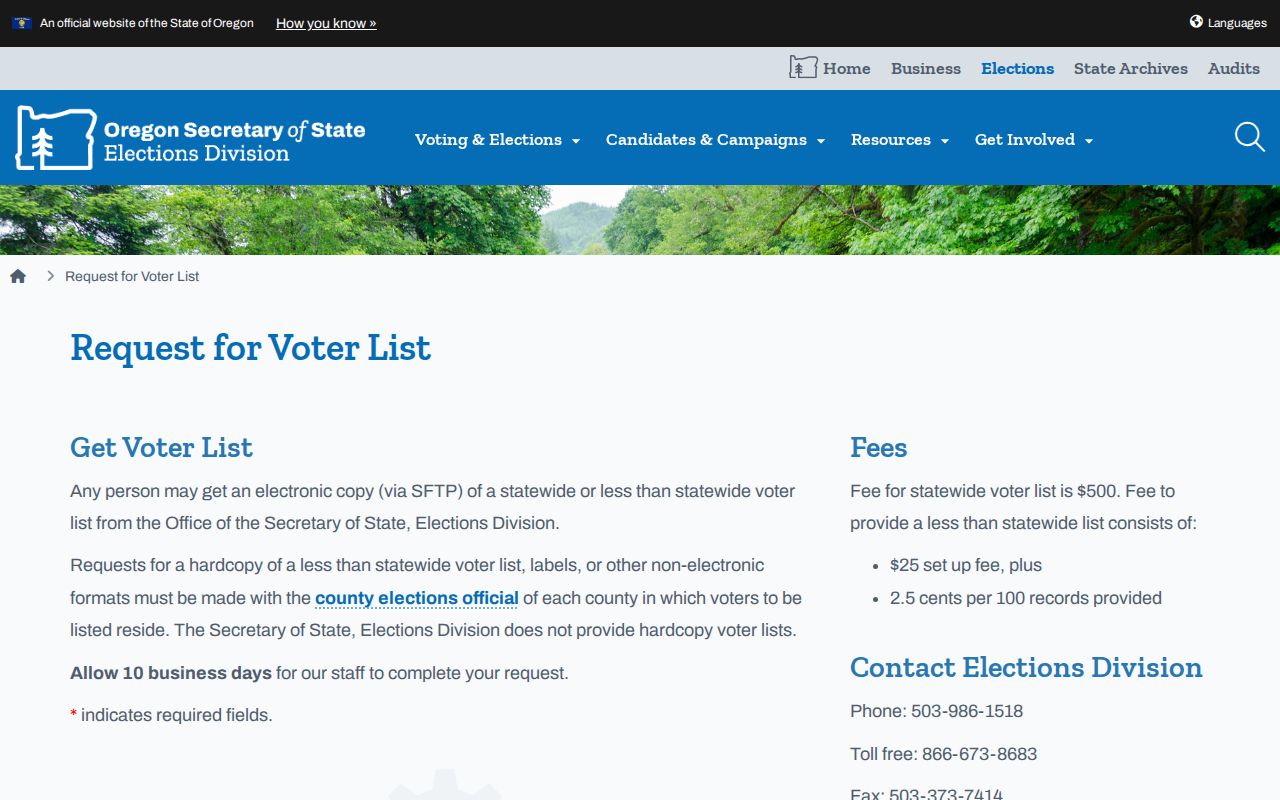
Use the statutory list route only for the defined records it permits, and preserve every protected-data exclusion.
Use Marion County Custody Sources Carefully
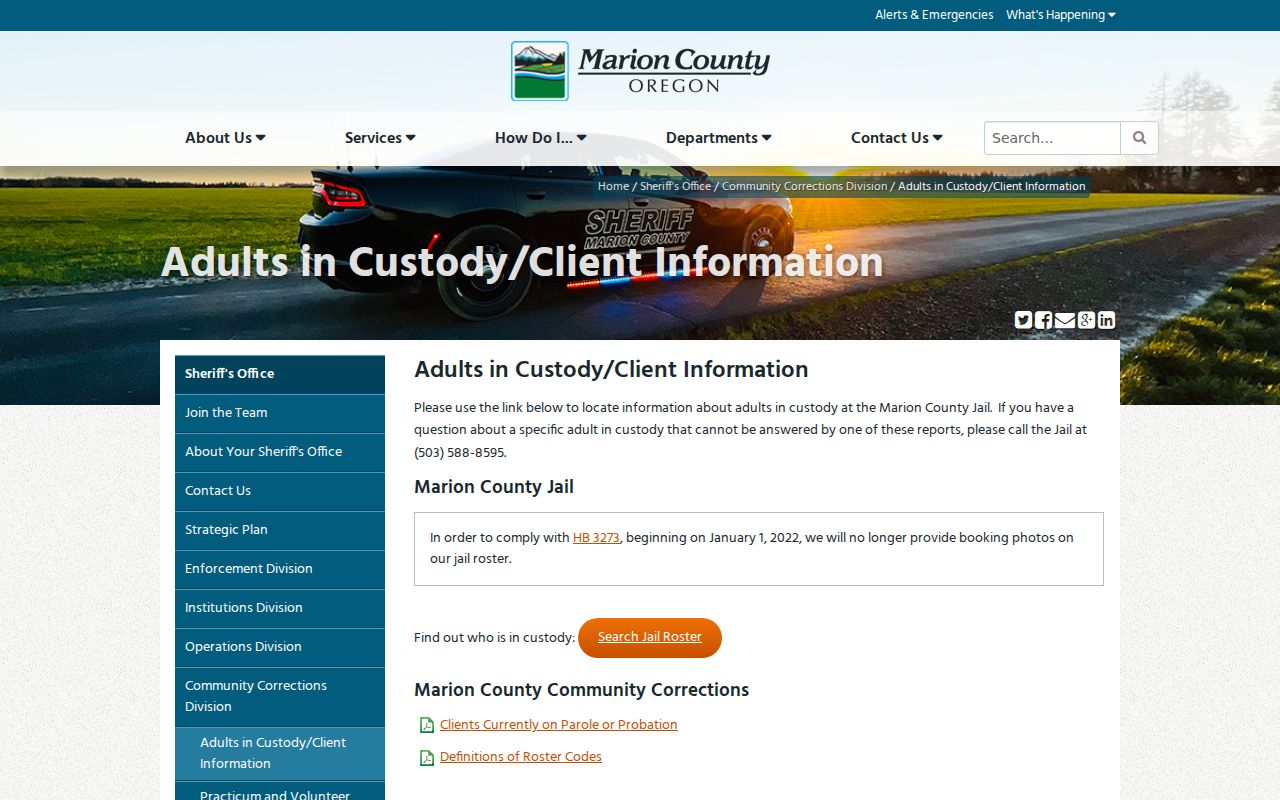
The Sheriff’s Adults in Custody information page links to the Marion County Jail roster and gives the jail contact for questions about the reports. A roster is a current custody and status source, not a complete criminal-history search. Since January 1, 2022, the Sheriff has not published booking photographs under HB 3273. Absence from the jail roster is not a clean-record finding, and a court docket does not establish that a person is currently in custody.
State and federal custody are maintained by separate custodians. A roster search does not belong in an ordinary name match unless the question requires the specific official record and the identifiers shown on that source have been checked.
The Marion County Jail information page states the current roster route and the booking-photo limit.
Keep a custody record in its narrow context and never use it to make a broader claim about a person’s life.
Request an Existing Marion County Record
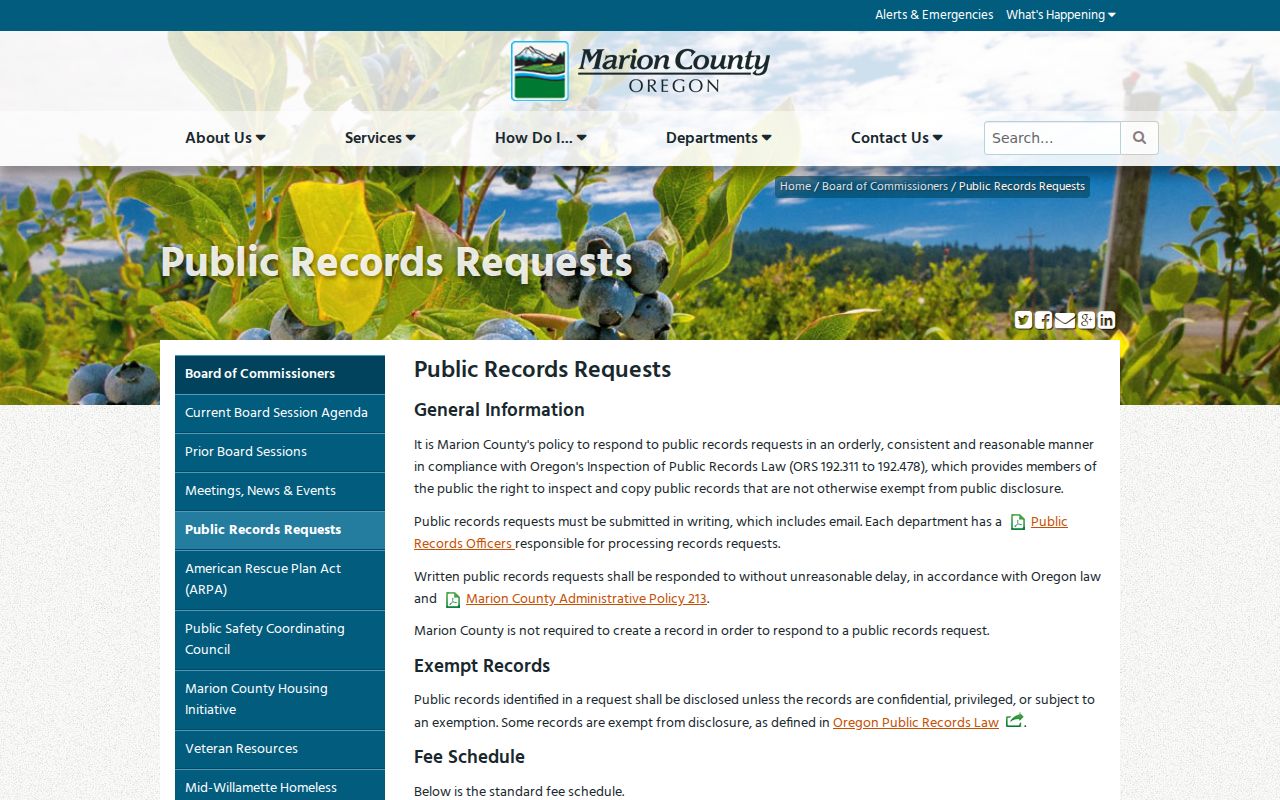
When an index identifies a specific missing record, the Marion County public-records request process is the written fallback for an existing, nonexempt county record. Name the custodian, record, date range, and desired format. Oregon’s Public Records Law does not require an office to create a custom list or release protected information. Marion County ordinarily acknowledges a request within five business days, then completes it or sends a processing or estimated-completion notice within 15 business days unless an exemption or other exception applies.
The county also lists 25-cent photocopies, media and postage charges, and staff-time charges. A narrow request built around a case number, tax lot, instrument number, or defined time span is more useful than a request for every record about a person. Requests for court records and certificates follow their separate court and OHA procedures rather than the county’s general route.
The county public-records request page outlines its written process, timing, and fee information.
A defined request gives the custodian a record to locate without asking it to assemble a new personal profile.
Keep a Marion County Resident Lookup Lawful
Oregon’s public-record rules include real limits. The Safe at Home Address Confidentiality Program supplies a substitute address to eligible survivors, and Safe at Home information is excluded from voter lists. Do not investigate around a protected address, use adjoining records to infer it, or publish an alternate location. Court confidentiality, restricted vital records, and protected voter information remain protected even when another record is public.
For a correction, contact the custodian that owns the fact: the Assessor for a property account, the Clerk for recorded-document indexing or copies, Elections for registration process, the court for court-record procedure, OHA for a vital-record amendment, and the Secretary of State or board for an entity or license filing. A public result should be kept as a dated, limited research fact, not spread as a claim about someone’s current life.
Lawful use. Use Marion County resident lookup information only for a lawful, respectful personal question. Oregon law does not permit stalking, harassment, intimidation, repeated unwanted contact, or efforts to locate a protected person.